Power and Environmental Hardening for Remote Tower Equipment
Unattended airport masts need layered power and weather protection to actually work.
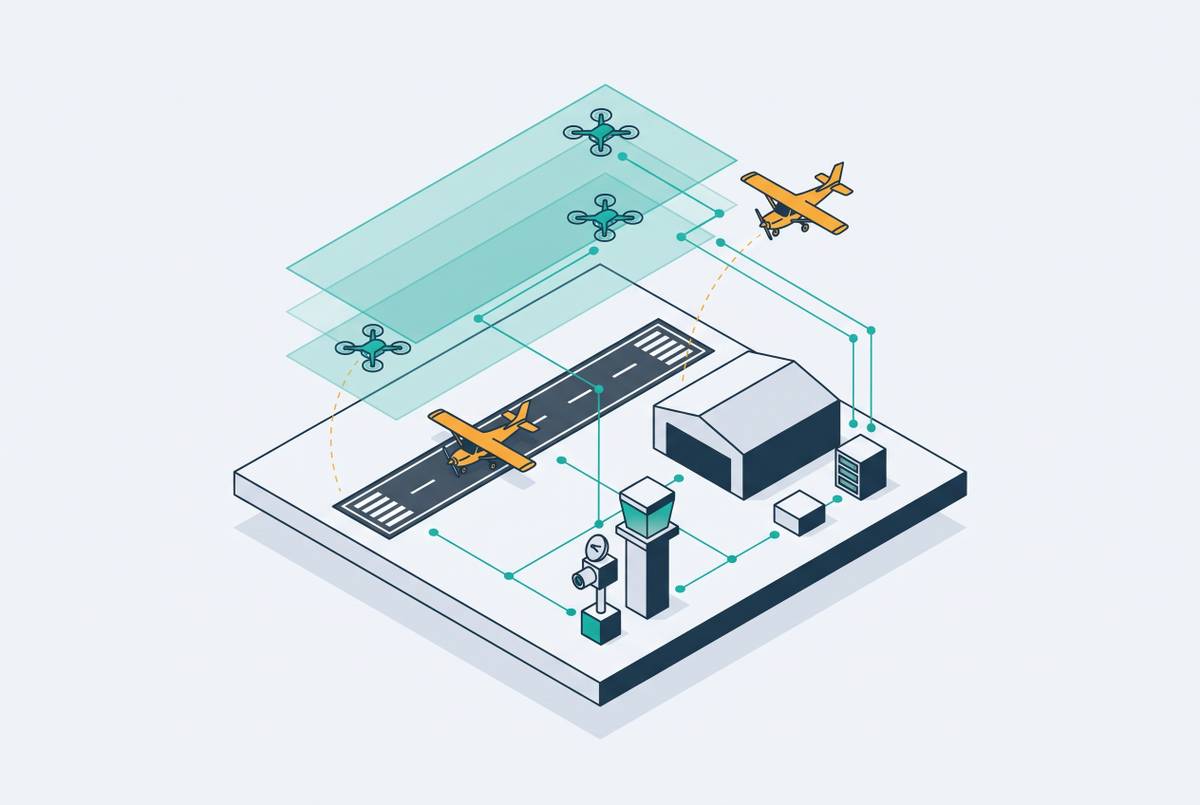
Most airports have no control tower, no controller on-site, and no backup plan for the moment something goes wrong. That gap, not the glamour of camera feeds or AI detection, is where remote tower technology has to prove itself. This piece is about what it actually takes to harden a remote tower system for deployment at those airports, and why power and environmental resilience are the real test of whether the technology works.
Deployment Context: Small, Uncontrolled Airports and Remote Tower Hardening
At an airport with no tower, safety depends on pilots following mandatory traffic pattern rules, watching for other aircraft under the see-and-avoid principle, and talking to each other over a shared radio frequency called CTAF. There's no controller to catch what a pilot misses. There's no redundancy built into the system beyond the discipline of the people flying into and out of the field. That's the baseline condition across most of the National Airspace System, and it's the condition remote tower technology is meant to improve on.
The fix is a set of cameras, sensors, and AI-assisted video feeds that a controller can monitor from somewhere else entirely, so air traffic control can reach fields that could never afford to build and staff a traditional tower. That idea only works if the hardware at the airport keeps running without anyone there to watch it. Small, rural, and coastal general aviation airports tend to sit in exactly the places where utility power is least dependable and weather is hardest on equipment. Whether the whole approach is viable at the airports that need it most depends on hardening.
What a remote tower system actually consists of, and where its failure points live
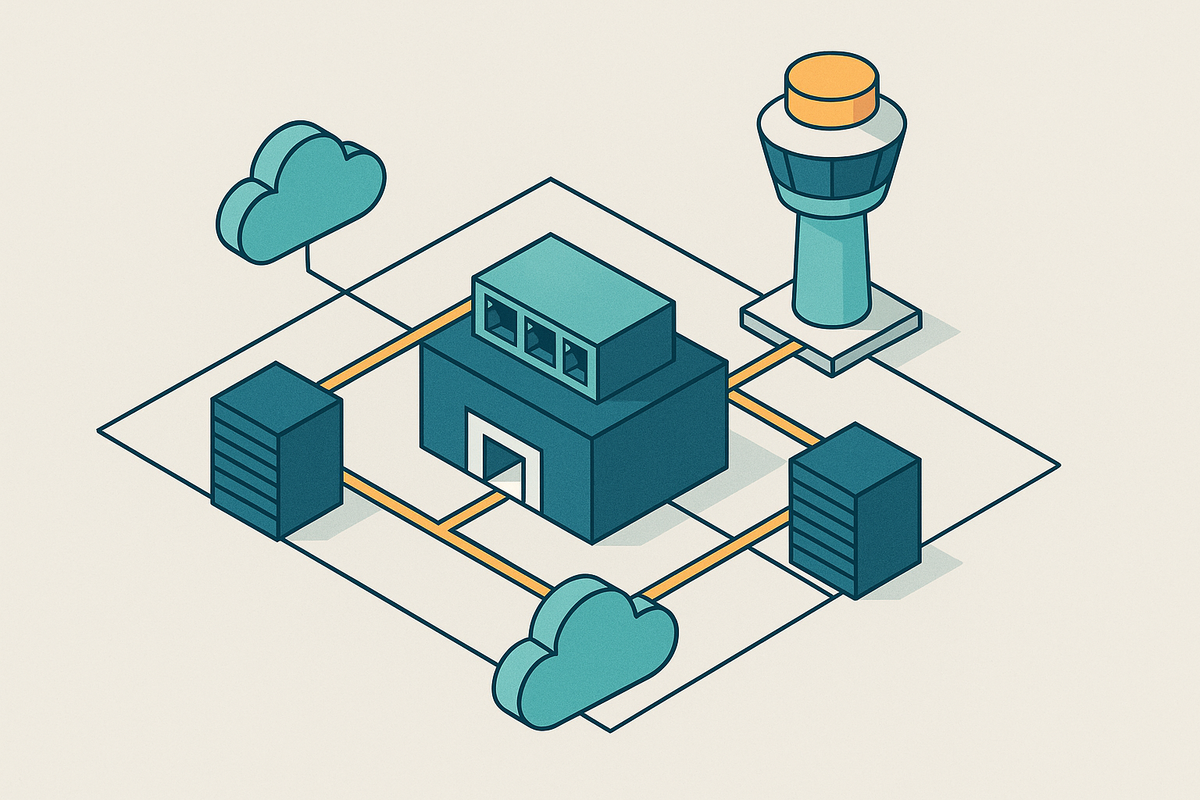
A remote tower system takes something that used to be one self-contained building, a tower with a controller inside it, and spreads the job across three separate locations connected by data links. That distribution is what makes the system flexible enough to serve an airport that could never justify its own staffed tower. It's also what gives the system failure points a traditional tower never had to worry about.
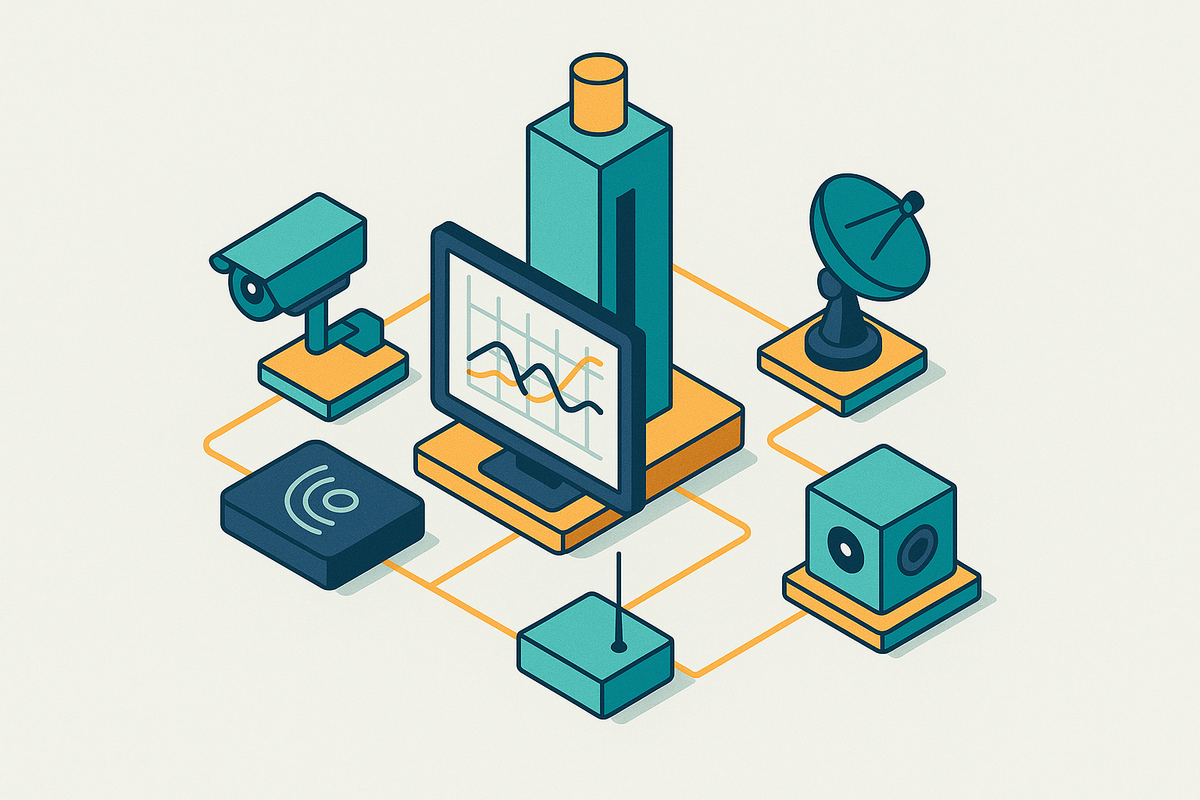
The first node is the sensor and camera mast standing at the unattended airport, which has to keep running and transmitting around the clock with nobody present to check on it. The second is the communications link that carries live video and operational data from that mast to wherever the controllers sit, and this path has to stay fast enough that a controller's situational awareness never lags behind what's actually happening on the runway. The third is the control center itself, where the computing hardware, the video walls, and the staffed positions turn those feeds into decisions.
At AlUla International Airport, a mast fitted with high-definition cameras and sensors sends live visual and operational data to controllers working roughly 550 kilometers away in Jeddah, who monitor it on a high-definition video wall equipped with night vision, AI-based detection, and augmented reality overlays. That installation shows what the technology can do, and it shows how much depends on every link in the chain between the mast and the people watching it holding up.
The three nodes don't carry equal risk. A problem at the control center is visible immediately to the staff working there, who can escalate it, bring in backup equipment, or shift operations elsewhere. A problem at an unattended mast in a mountain pass or along a coastline can go unnoticed far longer, because there's no one standing next to it to notice. That asymmetry is what should drive where hardening investment goes first.
The Unmanned Mast Site: the Hardest and Most Critical Node to Harden
The mast is where the hardening problem is hardest, because it combines the worst power reliability, the worst weather exposure, and the complete absence of anyone on-site to respond. Small and general aviation airports sit disproportionately in rural, coastal, and mountainous terrain, which is exactly where utility grids are least stable and where lightning, ice, heat, and wind do the most damage to exposed equipment.
A traditional staffed tower has someone inside who notices a power flicker, resets a tripped breaker, or picks up a phone to call for help. The remote mast has none of that. A fault that a technician standing on-site would catch and fix in minutes can sit undetected for hours or days at an unattended field, simply because no one is there to see it happen.
Communications exposure compounds the problem. If the data link goes down along with the power, the mast loses the ability to even tell the control center that something is wrong. It isn't just offline, it's invisible, and a system that can't report its own failure can't trigger the backup response that failure is supposed to set in motion. Severe weather, unreliable power, and no on-site staff together make the mast the place where resilience engineering has to concentrate for any remote tower deployment to hold up.
The specific hardening measures that address power instability at unattended sites
Power resilience has to come from several overlapping sources rather than one, because no single backup technology covers every failure mode at an unattended mast. The approach mirrors practices already common across critical infrastructure, where the industry has moved toward multi-fuel and multi-source backup.
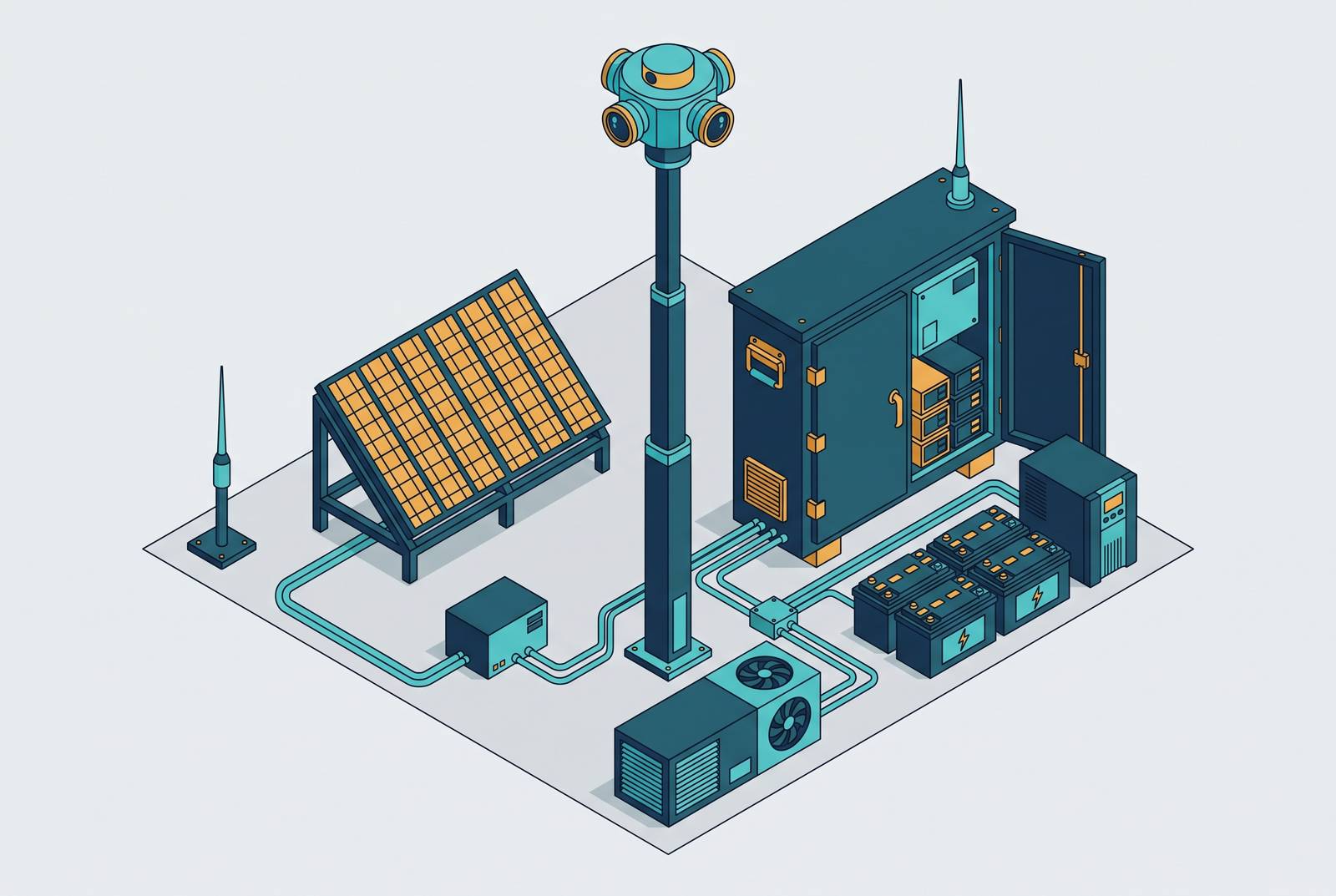
Generators that can run on diesel, natural gas, or propane provide the primary backup when utility power fails, and the right fuel choice depends on what's available and storable at that specific site. Long-duration batteries bridge the gap a generator can't close on its own: they absorb an outage the instant it happens, before a generator even has time to start, and they smooth the transition once the generator does come online, protecting the sensitive electronics in the camera and sensor array from the power transients that come with switching sources. Solar generation can reduce how often a site depends on utility power or fuel deliveries at all, which matters most at locations where getting fuel to the site is itself a logistical problem. Because batteries carry their own fire risk, fire-resistant enclosures matter at a site with no one present to notice smoke or respond to a fault.
None of that backup power means anything if the control center can't tell whether it's working. Satellite-based monitoring links give the center an independent channel to check mast status even when the ground-based communications path is down. If power fails, the system can trigger an alert and a dispatch response. And when an outage does happen despite all of that, the recovery time matters as much as the prevention did: standardized, pre-configured power units that can be trucked to a site and brought online fast shrink the gap between a failure and a fix.
Environmental hardening requirements: structures, enclosures, and electronics
Power backup only matters if the equipment it's protecting hasn't already been damaged by the weather itself. Structural and environmental hardening has to be designed into a mast installation from the start, not bolted on after the fact once a storm proves the enclosure wasn't up to the job.
The camera and sensor arrays are the most exposed part of the system and also the part doing the most essential work: they have to stay optically clear and mechanically sound through ice, wind, rain, dust, and years of UV exposure, often with only occasional maintenance visits. Thermal management cuts both ways. Heat in a sun-exposed or low-latitude installation can push electronics into throttling or outright failure, while cold weather degrades battery performance and makes seals and connectors brittle enough to crack. Lightning strikes are a specific hazard at any elevated mast, and grounding systems, surge protection on every cable entry point, and isolated cable runs are standard requirements for a mast carrying this kind of equipment, not optional upgrades.
Wind loading matters just as much, particularly for masts carrying panoramic or multi-camera rigs: a structure that flexes or vibrates under load blurs the image and stresses the mechanical mounts over time, so the structural design has to match the wind speeds the specific site actually sees. Ice loading on antennas and camera housings adds weight the structure has to carry and can block or distort the camera's view. Heated enclosures and hydrophobic coatings show up in high-latitude and high-altitude installations for this reason.
The deployment at Western Sydney International Airport shows what it looks like to build environmental performance in from the beginning: the system there was designed from the outset with twenty-five high-definition cameras, including night-capable systems, so that day and night operability and weather resilience shaped the camera and housing choices.
Hardening the Communications Link Between Mast and Center
A hardened mast and a well-equipped control center still depend entirely on the link connecting them, and at a small, rural airport that link is often the weakest part of the entire system. Remote tower operation leaves no room for delay: live high-definition video and operational data have to reach the controller fast enough to support real-time situational awareness, and any compression artifact, buffering stall, or added latency undercuts the one thing the system exists to provide.
The FAA's own modernization efforts point at this exact vulnerability. The agency has made the shift from copper wire-based telecommunications to fiber and wireless networks a stated priority, because aging telecom infrastructure has already caused real operational disruptions at major airports. That same fragility exists at small airports too, but without the redundant staffing that a major hub can lean on when a circuit fails. A well-designed link uses path diversity: it pairs a primary connection over fiber or fixed wireless with a satellite backup, so a failure on the main path doesn't interrupt the feed the controller is watching. Satellite backup does double duty here: it keeps the operational data moving during a terrestrial outage, and it gives the control center an independent way to confirm the mast is still alive even when the primary network isn't.
5G and other advanced wireless networks are opening up options at sites where running fiber is impossible or too expensive to justify. The FAA Reauthorization Act of 2024 explicitly authorizes remote tower program development using wireless telecommunications, a recognition that wired connectivity simply can't be assumed at every site a remote tower program wants to serve. That matters more at a small, rural airport than it does at a flagship deployment, where resources for fiber runs and dedicated infrastructure are far less constrained.
The objection that hardened digital systems trade one failure mode for a worse one
The strongest objection to remote tower deployment has nothing to do with cost or regulatory approval. It's the concern that a networked architecture concentrates risk in a way a collection of independent, staffed towers never would. A traditional manned tower that fails affects one airport. A remote center managing several airports from one facility could, in a systemic failure, pull ATC coverage from all of them at the same moment.
At a small, uncontrolled airport, there is no coverage to begin with. A remote tower that fails occasionally still improves on the current condition, as long as the hardening described above keeps failures infrequent and short. The system-level risk can also be managed architecturally: geographically distributed backup centers, automatic fallback to pilot-controlled operations with enhanced CTAF alerting, and mast-level recording and alerting that keeps working even if the control center itself goes dark. These design choices turn a theoretical systemic risk into a managed one.
Requirements for Evaluating a Remote Tower Solution's Hardening Claims
An operator who understands what hardening actually requires can test a vendor's claims. A few lines of questioning separate a system that's genuinely engineered for an unattended, exposed site from one that only sounds like it is.
On power, ask what backup duration the mast site is designed for, what fuel sources the generator supports, how the system manages the transition between battery and generator, and whether power status gets reported through an independent satellite channel. On environmental protection, ask for the IP rating of every outdoor enclosure, the design wind speed and ice load the mast structure is rated to withstand, the operating temperature range of the electronics inside it, and which lightning protection standard the installation actually meets. On communications, ask what the primary link technology is, what backup path exists, how long automatic failover takes, and whether that backup path can carry full video quality. On maintenance, ask how long it typically takes to detect a fault at the mast, what response time to expect given the site's location, and whether the system can self-diagnose and partially reset itself without someone driving out to the field. On certification, ask what FAA certification pathway the system is following and whether its design has been reviewed against any standards for power and environmental resilience in critical infrastructure.
General Aviation, which builds affordable digital ATC towers purpose-built for the roughly 90% of U.S. airports in the National Airspace System that currently operate without any tower, faces this hardening imperative directly: designing systems that have to work where utility power is unstable, no one is on-site, and weather exposure is severe, making resilience engineering a foundational part of the design. Its approach is built around the affordability and operational reality that small airport operators actually live with, not the assumptions that hold at a flagship international deployment with a far larger budget. Operators evaluating General Aviation's platform, or any other remote tower system, should put each of these questions to the vendor directly and expect specific answers, not general reassurance.
The mast at a remote, rural, or coastal airport is where every assumption built into a traditional staffed tower stops holding: no controller present to catch a power glitch, no one to reset a failed unit, and no way for the system to report its own outage if both power and the communications link fail at once. That constraint is what forces a digital ATC tower builder to engineer detection and response directly into the hardware and software. An operator who knows to ask about fuel-source flexibility, IP ratings, failover times, and certification pathways is no longer relying on a vendor's description of its own product. They evaluate a safety-critical system on its actual merits, with the right questions already in hand.