Australian Airservices Digital Tower Trials at Emerald and Karratha
Remote human controllers could serve airports without towers.
Australia’s Digital Aerodrome Service program shows how to bring human air traffic control to airports that cannot afford a conventional tower. For small U.S. airports, a shared remote service could provide control during the hours when regional traffic needs it. Karratha and Emerald show the conditions that model must meet, though the primary record supplied here does not confirm either as a DAS trial site.
Why most Australian regional airports still lack ATC coverage, and what that costs in safety
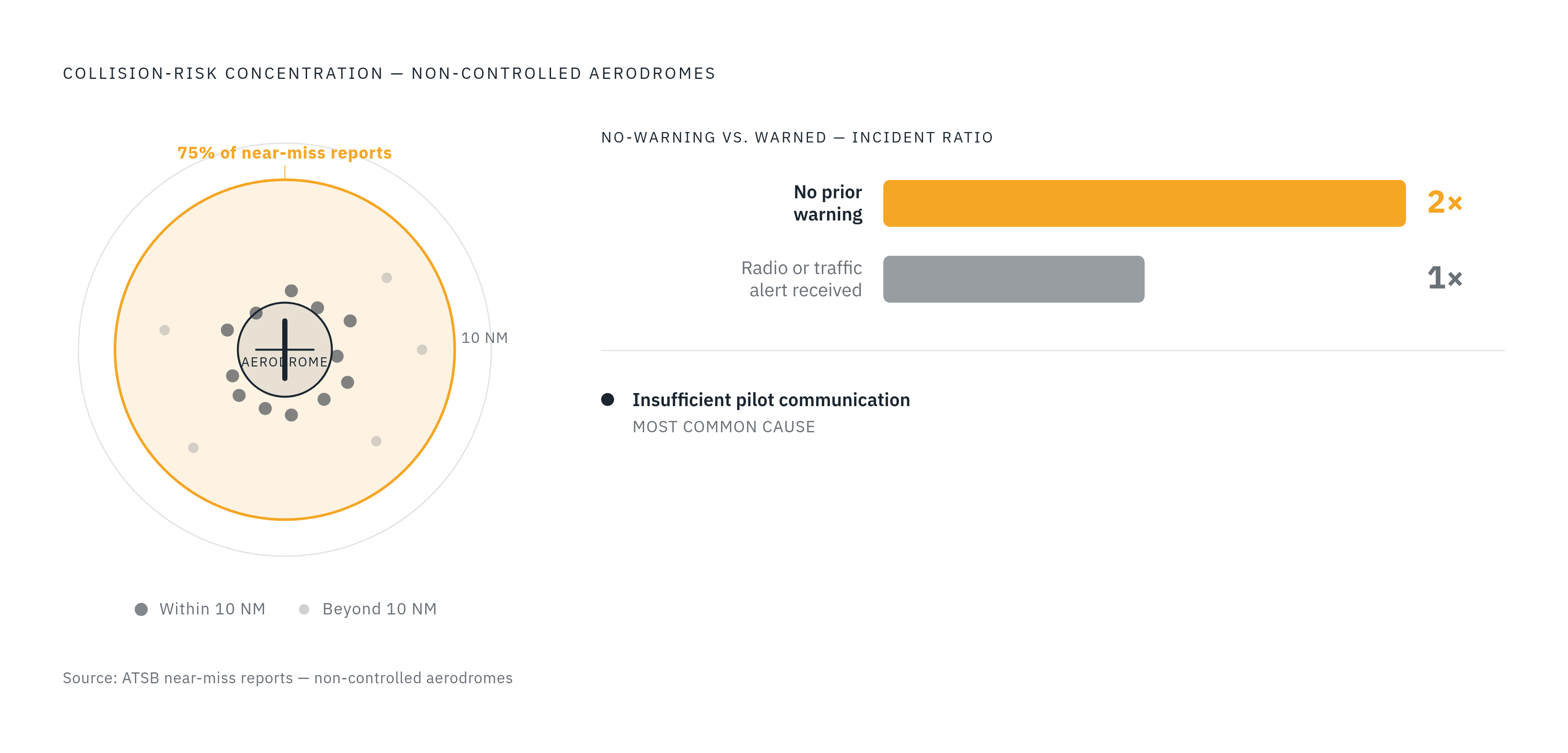
Most Australian aerodromes have no air traffic control, so pilots must keep clear of one another by watching and communicating. The ATSB regularly receives reports of aircraft flying too close to one another in uncontrolled airspace. Three-quarters of those reports are about incidents within ten nautical miles of a non-controlled aerodrome. The exposure is concentrated close to the airfield. That makes the coordination of arriving, departing and nearby traffic a central safety concern, rather than simply a question of how much airspace is controlled.
The ATSB identifies insufficient communication between pilots as the most common cause of safety incidents near non-controlled aerodromes. It receives twice as many near-collision reports involving pilots with no prior warning of nearby aircraft as reports involving a radio or traffic-system alert. Reported incidents do not capture all exposure. Yet building a conventional tower takes a large sum up front and staff who stay on even when there is too little traffic to justify the cost. Those costs and staffing needs have left most major airports with towers and most regional airports without them.
What Airservices Australia's Digital Aerodrome Service actually does and how it works
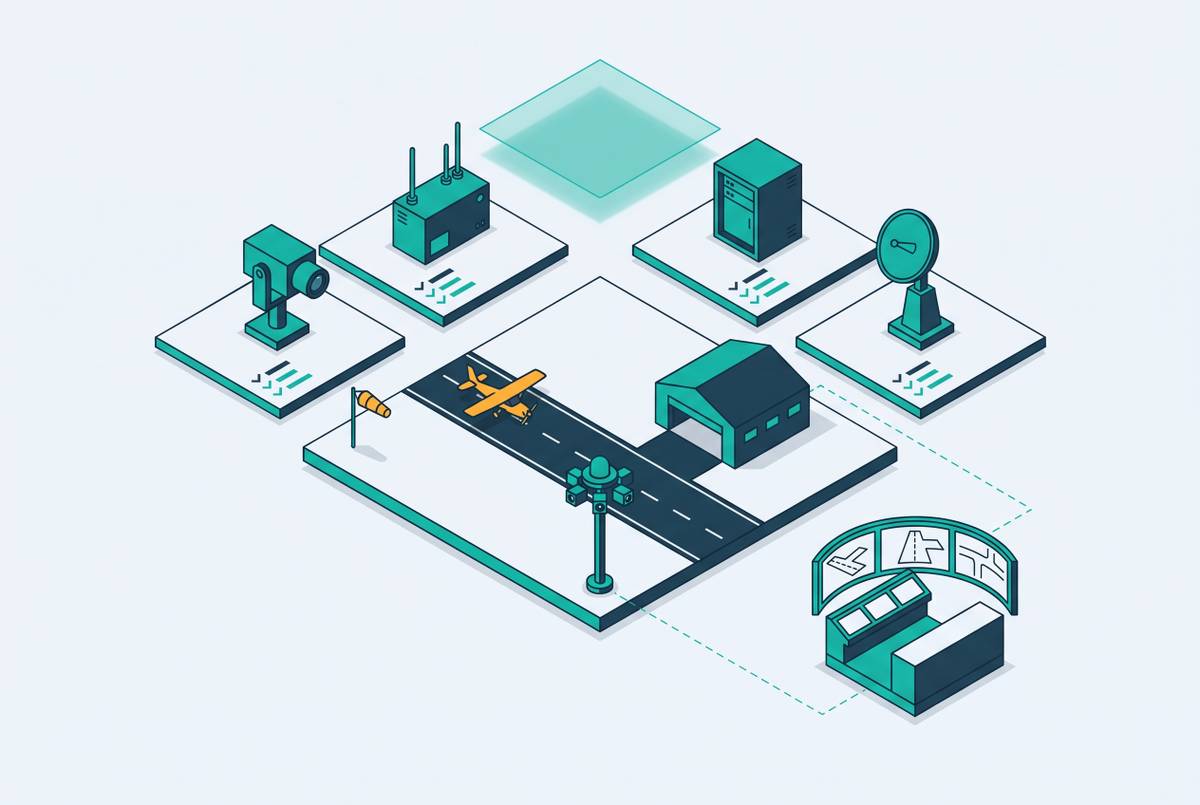
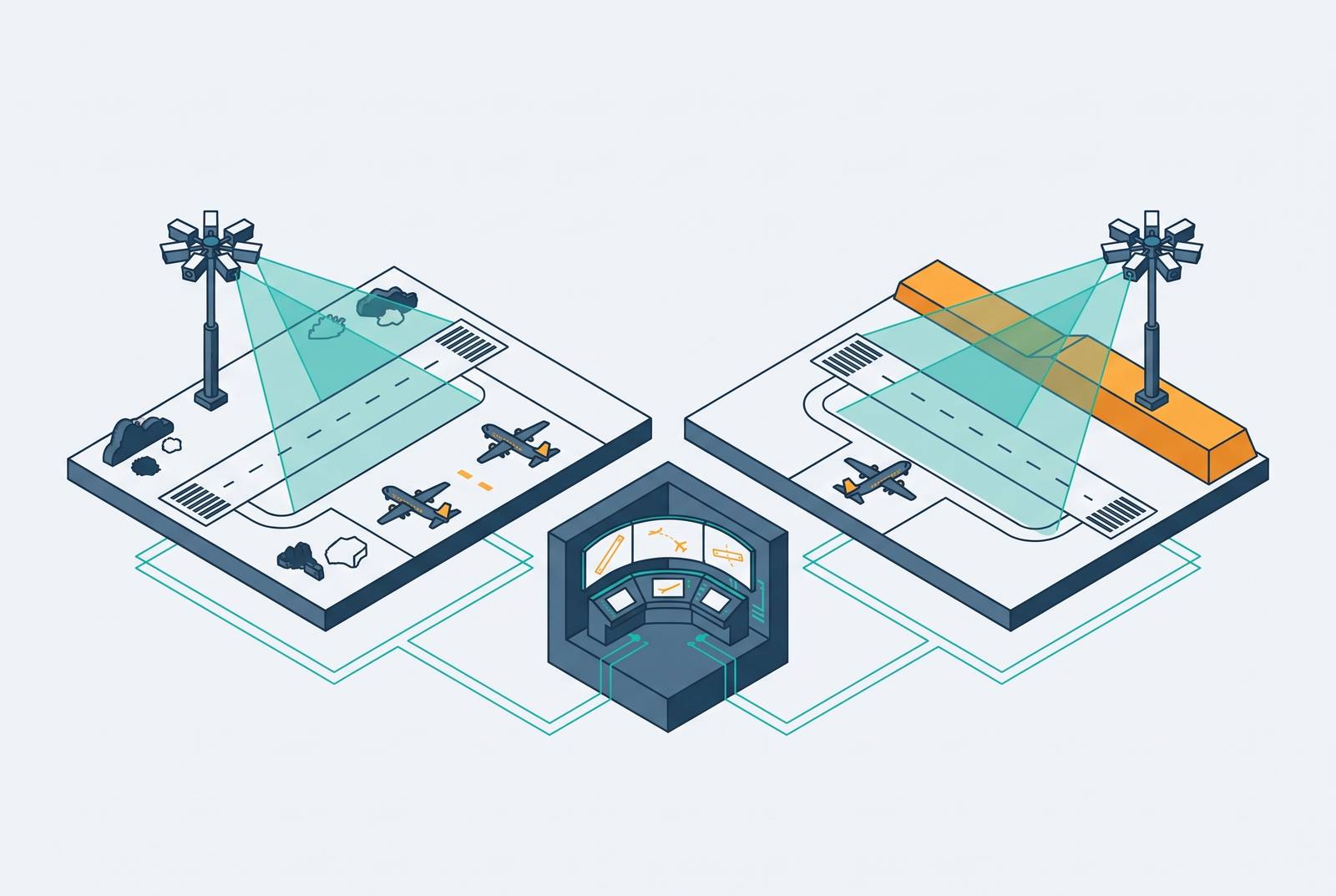
Airservices Australia’s Digital Aerodrome Service relocates the controller’s view and workplace. Cameras and sensors feed a remote centre instead of requiring controllers to look through a cab above the runway. Qualified human controllers still decide what to do and give clearances. The distinction is fundamental to the safety case. DAS is a different way to deliver human air traffic control.
At Western Sydney International (Nancy-Bird Walton) Airport, more than twenty high-resolution cameras give a view of the airport and the airspace around it. Sixteen cameras make up a 360-degree array, and four more cameras on top can pan, tilt and zoom. Each camera is individually cabled, allowing images to be stitched together if one unit fails. Controllers work away from the airfield at Eastern Creek. Their purpose-built DAS centre is housed at a CDC Data Centres campus, separating the operational workplace from the camera structure.
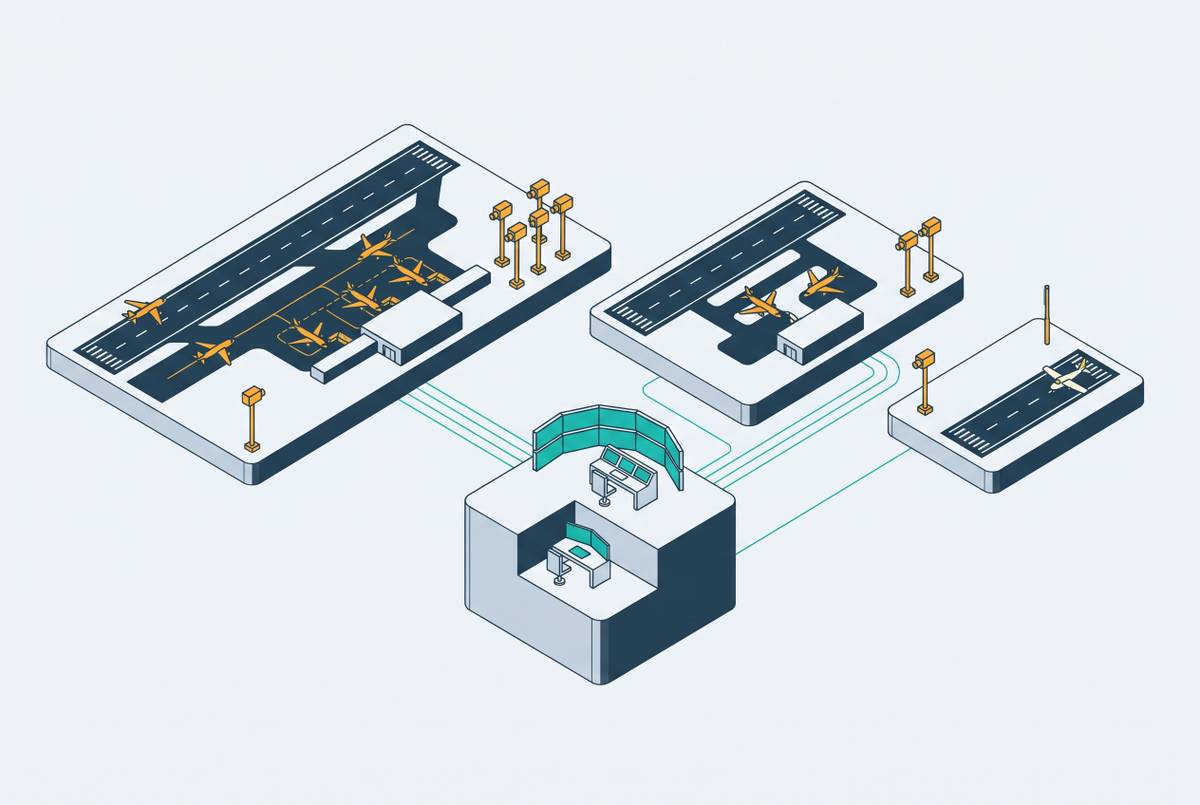
The digital view also gives controllers tools they cannot get through a conventional window, including object tracking, night vision, image enhancement and infrared imagery. David Webb, who was formerly Airservices’ head of transformation – OneSKY and aerospace, described how the system can spot and tag aircraft automatically for controllers. These functions extend the controller’s visual tools. The design also includes three lines of defense against cyber threats, while Canberra Airport is named as a backup DAS site for Western Sydney. Beyond these individual capabilities, the decisive architectural change is that one remote centre can serve multiple airports, giving regional sites access to shared infrastructure and staff.
How Australia arrived at Western Sydney International as the first operational DAS site
Australia’s route to operational DAS included an abandoned experiment before the commitment to Western Sydney. Around 2012, Airservices planned a trial in which controllers in Adelaide would use cameras and sensors to manage aircraft at Alice Springs. That trial was ultimately cancelled. It was not an uninterrupted progression from concept to service. Remote communications and checks that the service would work safely were already concerns before a new airport was built around digital control.
In 2019, Airservices announced digital tower trials at Sydney International for the following year, beginning with a prototype contingency system. Trials ran through the early 2020s, helping to develop the system before the purpose-built installation. Airservices describes Western Sydney as Australia’s first airport without a traditional air traffic control tower and its first purpose-built DAS. The airport was designed for that choice from the outset. In February 2026, a Royal Australian Navy EC-135 helicopter conducted passes and manoeuvres near the 45-metre camera structure as part of pre-opening testing.
A Jetstar Airbus A320 arrived from Melbourne on 31 August 2026 during final preparations for passenger operations. Jetstar planned for the first commercial passenger flight to leave on 25 October, eight weeks later. Airservices CEO Jason Harfield described the system as “world-class technology that will improve the capability of our controllers, enabling us to deliver even greater levels of safety and increased capacity”. The Australian Government’s infrastructure page records passenger operations commencing on 25 October 2026.
Why Karratha and Emerald represent the next and more instructive test of the technology
Western Sydney is a purpose-built metropolitan deployment with substantial expected traffic, whereas regional airports present a different operating problem. Existing facilities, concentrated demand, thin staffing pools and limited connectivity constrain what a remote service can deliver economically. Karratha and Emerald make those constraints concrete. The primary record supplied here supports Karratha’s existing ATC and airspace conditions more strongly than it supports a DAS deployment at either airport.
Airservices lists Karratha Airport in Western Australia’s Pilbara region among its conventional ATC towers. Its 2023–24 Annual Report mentions Karratha in PFAS remediation planning and describes the camera-based transition for Western Sydney and Canberra. A 2020 CASA-led airspace review recommended changing Class E airspace at Broome and Karratha to Class D. The review exposes a surveillance gap even where a tower exists. ADS-B is the only electronic surveillance available at those locations, while VFR aircraft are not required to carry ADS-B avionics, broadcast their position or obtain clearance to enter Class E airspace.
Emerald Airport in Central Queensland has a different mix of regional traffic, serving the agricultural and resource sectors at busy times that are easy to predict. A remote service operating during those windows could address demand that is difficult to support with a dedicated staffed tower. The Airservices 2025–26 Corporate Plan lists DAS rollout as a key initiative, but the secure remote centre it describes is specifically for Western Sydney. The annual report also identifies Canberra as a deployment site with operations scheduled for 2025, establishing planned expansion beyond the flagship without proving an equivalent commitment at Karratha or Emerald.
The economics that make a centralized DAS hub viable for airports that could never afford their own tower
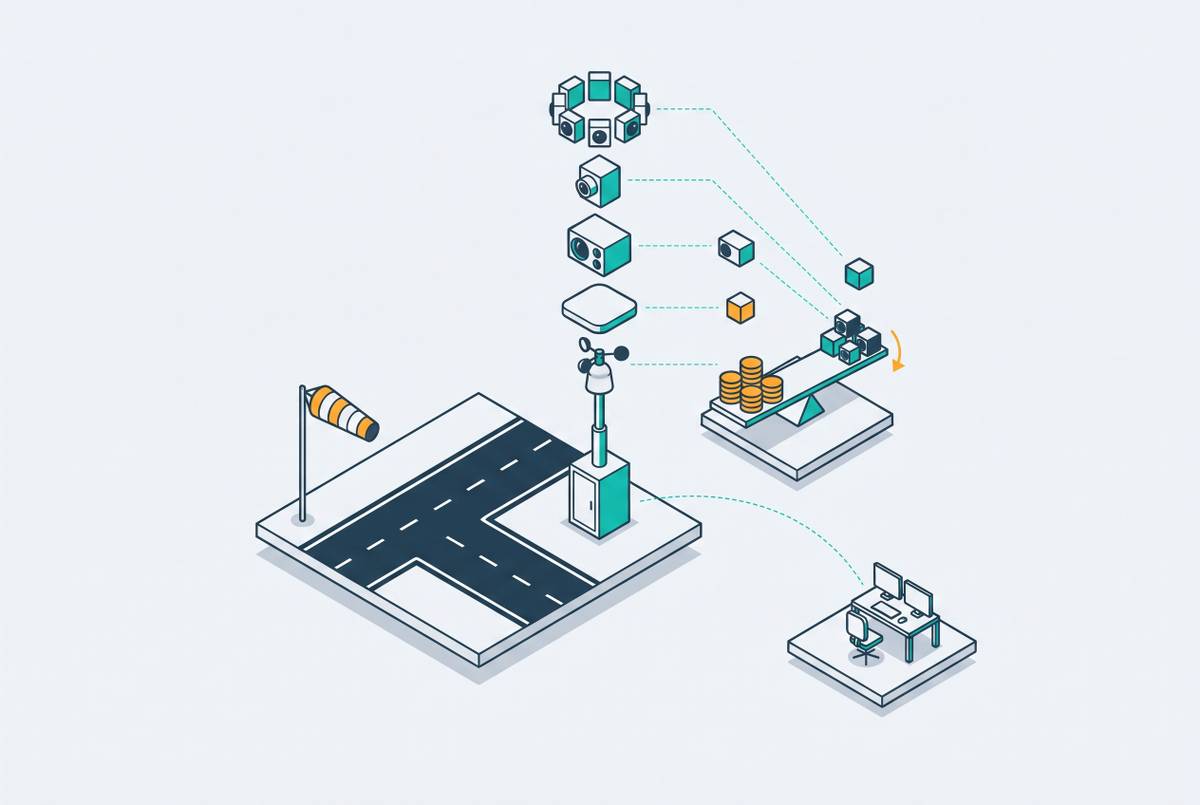
The economic comparison is not simply a physical tower against a camera installation at one airport. A comparable remote installation costs much less at each site, but sharing a control hub across several airports brings a bigger change. Infrastructure and operational resources can serve several low-volume locations, changing the unit of investment. Eastern Creek provides the centralised architecture on which this shared-service model depends, rather than requiring every participating airport to reproduce a complete control facility.
Staffing provides a further source of savings because one hub team can serve lower-traffic airports across predictable operating windows. For an airport with infrequent movements, the service can be available when traffic warrants it rather than supporting dedicated controllers through periods of minimal activity. Emerald’s demand profile illustrates that potential fit. The economic benefit also depends on how several airports’ requirements fit within the staffing and operating arrangements of the shared centre.
Up-front capital remains a barrier for small municipal airports, even when the remote option is substantially cheaper than a conventional tower. An isolated installation still has to support its own equipment and connection to the control service. Shared infrastructure is therefore central to affordability. The business case closes most reliably when several airports use the same hub, allowing costs to be spread across more than one traffic base. This offers a route out of the earlier either/or choice, although lower cost alone does not establish that a particular airport can fund and sustain the service.
The real obstacles the DAS rollout must clear before regional airports benefit
Regional DAS depends first on communications that remain available when the normal path is disrupted. Providing adequate backup paths in sparsely populated Australia was already a concern during planning for the Alice Springs trial. The same constraint applies to regional locations with limited network redundancy. Metropolitan success does not settle that issue. A regional safety case must establish the reliability of the connection between the airfield and the controller, rather than treating it as a routine extension of the camera installation.
The controller’s working environment also changes fundamentally when a reproduced image replaces the natural out-of-the-window view. Before CASA approves the service for use, controllers must complete training, gain certification and show that they are confident using it. A system may offer image enhancement and automatic tagging, but those functions do not by themselves demonstrate how effectively controllers build and maintain their traffic picture. Regional validation must address the human use of the system as well as its technical performance.
Centralisation also concentrates risk because several airports may depend on one data centre. Eastern Creek’s three-lines-of-defense architecture responds to cyber threats, but its effectiveness must be validated under operating conditions. With part-time service, pilots must still self-separate outside the hours scheduled for controlled operations. Control during busy windows can make flying safer, while the risks of uncontrolled traffic remain during other hours.
After a high-fatigue-risk runway incursion at Sydney on 27 July 2026, Airservices said it was taking steps to recruit more controllers and make additional staff easier to call on, illustrating a broader workforce pressure. A hub can make it easier to use staff across different places, but it still needs enough trained people. Tests at a site such as Karratha would therefore need to show that the cameras perform well, the remote service works reliably, controllers are confident using it and staffing can be sustained.
What does Australia’s DAS program mean for small U.S. airports and the substantial share without ATC coverage?
For small U.S. airports, the Australian program makes shared regional service a more useful comparison criterion than the sophistication of a flagship installation alone. The platform must work with thin traffic, scheduled coverage, constrained connectivity and a small budget to run it. Those are different requirements from a major hub’s. A regional offering stands out when it can support a shared service that works and can be sustained, with qualified controllers, communications that hold up when disrupted and regulatory approval. The supplied evidence does not establish a named vendor ranking or demonstrate that any platform has already satisfied those requirements for a particular U.S. deployment.
The substantial share of airports without ATC coverage offer a wider market alongside airports that need to replace existing towers. The United States has a much larger population of uncontrolled airports than Australia. However, Australian deployment does not confer U.S. approval. CASA’s part in the Ballina Byron Gateway Airport digital tower collaboration shows how regulators can take part, while the Western Sydney deployment and Canberra program show how a service can move beyond a prototype. These are reference points for another national system, which requires its own operational validation.
Affordable digital ATC providers focused on the U.S. NAS coverage gap, such as General Aviation, a US-based company that designs and installs remote tower systems for the roughly 90% of American airports with no control tower, can use that progression to explain the service model they intend to deliver. Digital towers also offer a basis for UAS integration into controlled airspace at regional airports, adding an emerging operational need to the coverage question. The opportunity extends beyond replacing an existing structure. It is to make controlled operations feasible at airports where the traditional model has never been affordable, with regional validation determining how far that promise can reach.