Lessons From Failed or Stalled Remote Tower Programs
Regulatory gridlock kept U.S. remote towers grounded despite technical success elsewhere.
Remote tower programs in the United States have stalled because certification, procurement, and institutional barriers prevented technically capable systems from reaching approved operation. For small airports, affordable digital ATC offers a way to avoid building a conventional tower, but equipment alone cannot win approval. The lesson from failed or stalled programs is that a workable regulatory pathway must be part of the project from the start.
What digital tower technology actually does and why it was expected to succeed
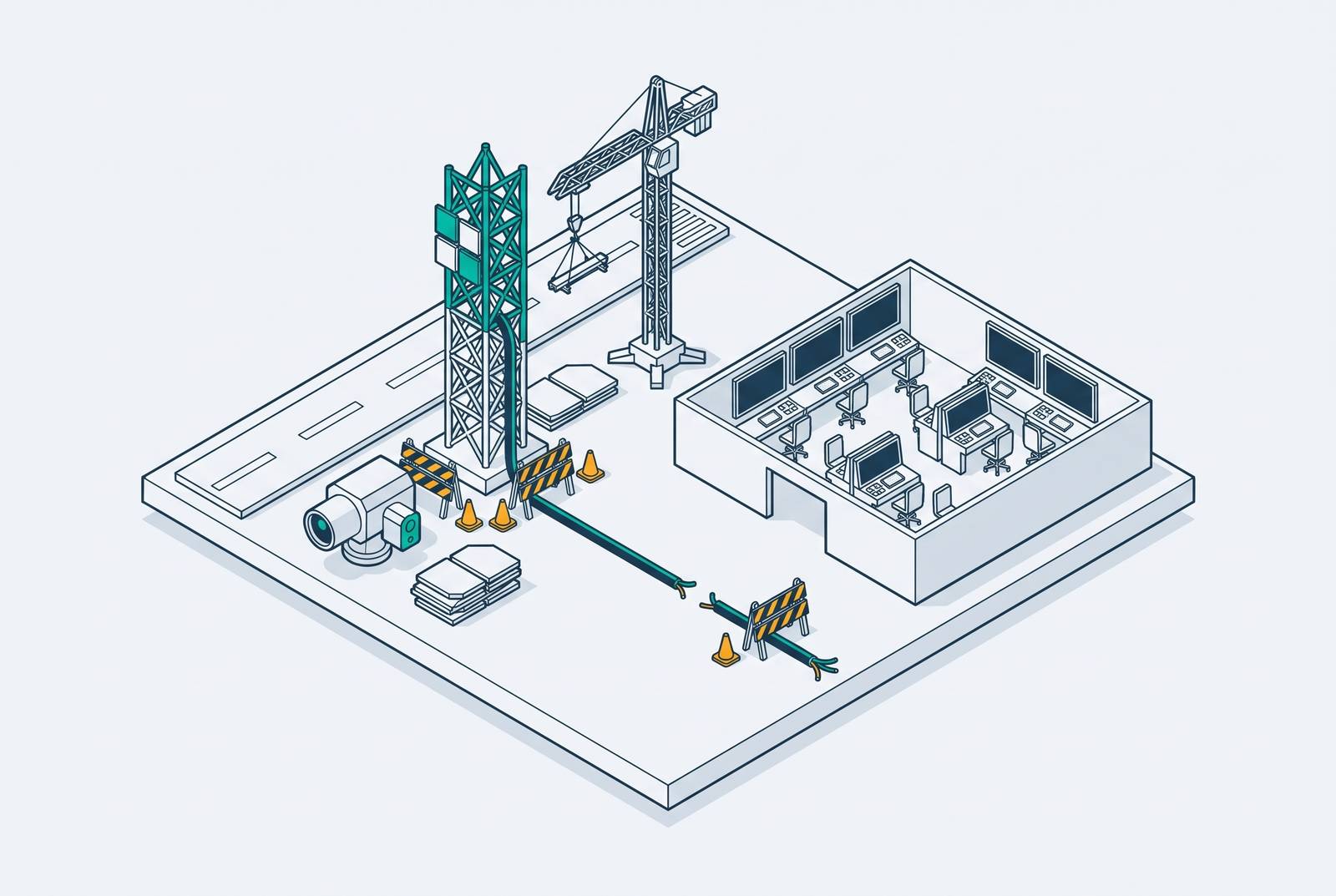
A digital tower replaces the elevated glass cab with a steel mast array of HD and infrared cameras feeding panoramic video to controllers in a ground-level room lined with large displays. The view changes, but traffic procedures do not. Controllers work one airport at a time, even when certified for several. They can zoom beyond what binoculars allow, use infrared to see through fog and darkness, and tag individual aircraft on-screen.
Those capabilities made early optimism reasonable for operational as well as financial reasons. Construction costs are a fraction of those for a conventional tower, while a single Remote Tower Centre can serve multiple airports. That combination is particularly relevant to small airports where conventional construction is difficult to justify. The FAA itself helped build the original technology. Its early involvement makes the subsequent absence of a workable domestic approval process especially consequential.
How the rest of the world moved from experiment to routine operation
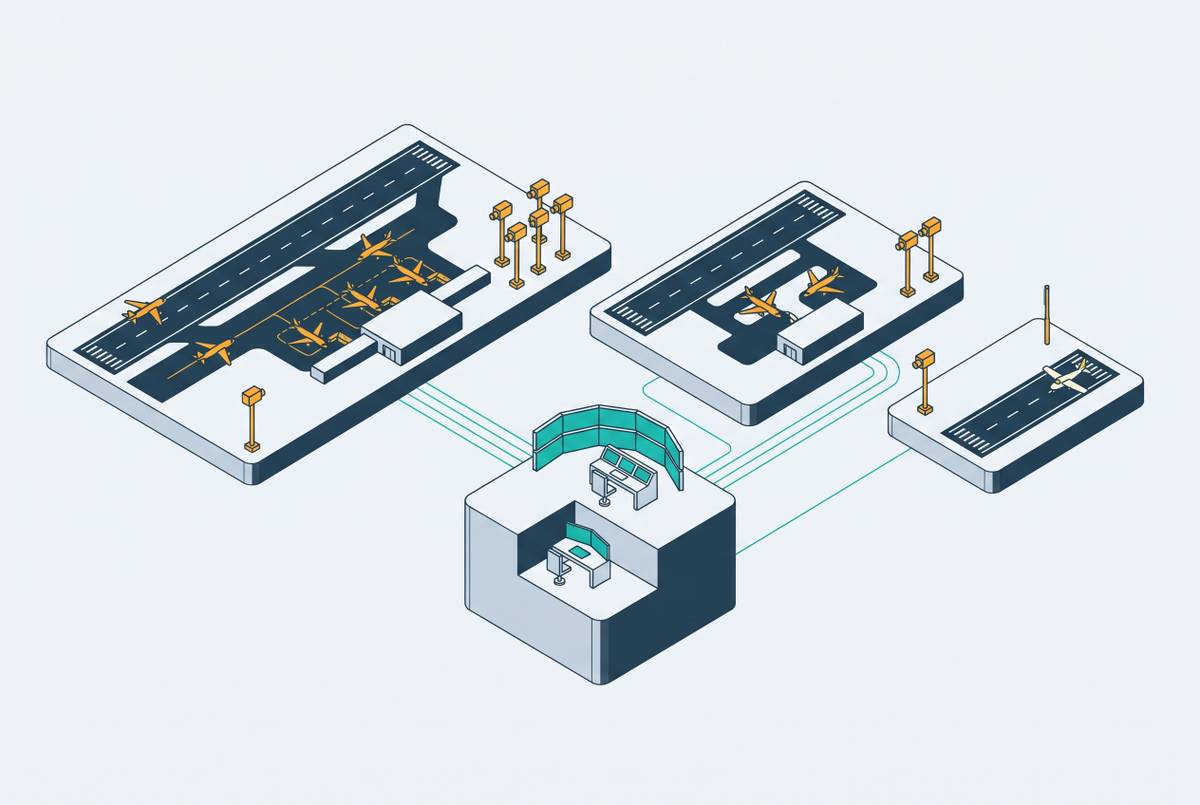
Norway provides the clearest example of digital towers operating at scale. Avinor manages multiple airports from a single Remote Tower Centre in Bodø, with additional airports scheduled to go live within the next two to three years. The significance of this operating model lies in the progression from proving the equipment to extending an established service across more airports.
Europe accounts for the largest share of global deployment, while interest is growing rapidly in Asia-Pacific. The United States, by contrast, has remained at zero operational certified systems. Overseas deployments do not remove the need for U.S. certification, but they establish that the barriers are not universal. Other regulatory environments have moved beyond experimental approval to routine operation.
Air navigation service providers adopting the technology also report benefits for controllers. Digital working environments draw younger people to the job and ease the workload and stress for staff already there. That benefit reaches beyond the construction budget. With too few controllers in the country, the benefits for staff need to be weighed alongside how well the technology works and what it costs.
The U.S. experiments that worked technically and collapsed institutionally
Leesburg Executive Airport in Virginia tested the technology against a demanding operating environment. Annual traffic grew substantially over the program’s life, and its designers used the busiest uncontrolled airport benchmark they could find in the Northeast. Following intensive operations using FAA controllers, the agency declared the system “operationally viable.” It nevertheless never set a target date for certification.
No ATC error was recorded at Leesburg.
That record distinguishes demonstrated performance from unresolved approval requirements. Leesburg officials subsequently announced plans for a conventional brick-and-mortar tower with FAA grant funding and support. The town arranged to use a mobile tower for the time being while moving ahead with construction plans, and the remote tower control room sits unused.
Northern Colorado Regional Airport in Loveland ran into another form of the same approval problem. An abrupt FAA update to technical requirements delayed the project, then the only one undergoing system design approval, by at least four months. Testing could not deliver a predictable approval outcome. Together, the two cases show how years of technical work can fail to produce an operational service when certification remains undefined or changes during the process.
The three structural barriers that actually caused the stall
The first barrier was the absence of a workable certification pathway. Despite its early role in developing the technology, the FAA did not establish formal standards and a defined approval route with milestones and target dates. Sponsors and vendors instead faced ad hoc decisions. Concerns about hazardous information reaching controllers and legal liability emerged as barriers after years of testing, rather than being resolved through an established process before or during it.
A 2022 FAA decision required vendors to install systems at the FAA William J. Hughes Technical Center at Atlantic City International Airport in Egg Harbor Township, New Jersey. The FAA’s Report to Congress stated that future applicants’ systems would have to be tested there. Evaluation was thus separated from the airports where systems would operate. That requirement broke with international best practices, added substantial costs, and left most airport sponsors with little chance of moving ahead.
The third barrier was that technical requirements could change during approval. Northern Colorado’s delay illustrates the direct effect of changing requirements after work is underway. Sponsors could not treat completed testing as a stable foundation for the next stage. Combined with an undefined certification schedule and the cost of a separate evaluation installation, that uncertainty made withdrawal a rational response.
A published approval route would not by itself remove the cost of the mandated testing location. Nor would a cheaper evaluation site keep requirements from changing partway through a project. Progress required all three problems to be addressed.
Why workforce politics complicated an already difficult certification environment
Estimates suggest that a large share of existing towers lack the traffic volume to justify their staffing. Some controllers thus feared that wider digital tower certification would lead to the closure of staffed facilities in rural states. That concern is about employment geography. It made controller unions a reluctant constituency for a technology that could also help address the national staffing shortage.
Yet labor leadership has not uniformly opposed digital towers. Former National Air Traffic Controllers Association President Paul Rinaldi publicly supported their safety, cost, and performance benefits. Rinaldi wrote, “The zoom feature on digital towers goes well beyond a pair of binoculars in a standard tower.” He also praised infrared vision for detecting runway obstructions. His endorsement complicates any account that attributes the stall to organized labor opposition alone.
The distinction is between national staffing needs and fears about individual facilities. Digital towers allow existing and new controllers to be deployed more productively. The overseas recruitment experience supports that workforce case. Even so, the benefits the system could bring nationwide do not by themselves ease fears about local closures, which makes it harder to carry out legislative mandates.
What the FAA Reauthorization Act of 2024 required and what actually happened
The FAA Reauthorization Act of 2024, enacted May 16, 2024, addressed these barriers through Section 621. Public Law 118–63 required the FAA to publish a clearly defined system design and operational approval process with milestones within a fixed statutory deadline. It also required evaluation at at least three locations outside the Atlantic City Tech Center by the end of 2024.
The law also directed the agency to preserve Northern Colorado’s prior system design approval work. Briefings to Congress every six months through September 2028 were meant to make the agency’s work more open. Another amendment made clear that remote towers were eligible under the FAA Contract Tower Program statutes. That change addressed the funding imbalance between remote and conventional towers, though eligibility alone could not deliver certification.
The comprehensive development and deployment plan was not submitted on time, and system design approval evaluation was not expanded outside the Technical Center as mandated. Those documented gaps show the limit of legislation when the implementing agency still controls the pace of delivery.
The Digital Tower Technology Coalition formed in April 2026 specifically to hold the FAA accountable to Section 621. Coordinated by Rinaldi Consultants, it also joined the Modern Skies Coalition’s push for broader NAS modernization. Its formation added an organized constituency for implementation.
What the safety cost of inaction looks like at uncontrolled airports
Small, uncontrolled fields continue operating without the ATC coverage that a functioning approval pathway could make more accessible. The vast majority of U.S. airports have no control tower, and thousands could fit some form of remote tower service. Delay therefore affects more than prospective equipment purchases. It preserves the operating conditions that prompted interest in digital coverage.
Runway incursions continue to put safety at risk at U.S. airports. Although overall counts have varied from year to year, the most severe category has trended in the wrong direction. These near-collision events are the kind of hazard that ATC presence is designed to help prevent. This makes the absence of coverage relevant to the safety comparison.
The FAA’s emphasis on “potential safety impacts” of approval weighs the risk of introducing a system without fully accounting for the risk of leaving an airport without ATC. Congress explicitly required the agency to “assess the safety benefits of a remote tower against the lack of an existing tower.” That is a different baseline for evaluation. It asks whether the proposed service improves on the actual alternative, rather than comparing it only with conventional tower infrastructure.
A brick-and-mortar tower requires an estimated $5–10 million in construction alone, before significant annual staffing costs. For most small airports, that threshold can end consideration before procurement starts. Digital construction changes the economics, making certification policy part of the practical boundary between possible coverage and no coverage.
What programs that have made progress share in common
Programs that have advanced have paired capable equipment with defined regulatory pathways, stable procurement frameworks, and institutional champions. Norway’s program had a clear primary objective of avoiding costly new tower construction. A single centre served multiple airports, and a progressive deployment schedule extended the model without ad hoc requirements changes mid-deployment.
Concord-Padgett Regional Airport in North Carolina offers a narrower U.S. example of early progress. In April 2022, it partnered with a technology vendor to replace an aging Contract Tower Program facility. That project connected digital technology to an established replacement need and procurement route. It should not be confused with a certified operational deployment. Its relevance is the alignment between the airport’s infrastructure problem and the funding framework that Section 621 later codified nationally.
Section 621’s protection of Northern Colorado’s prior work recognized that completed testing should not be erased by regulatory resets. The coalition’s seven focus areas extend that principle across system design and approval, multi-airport management evaluation, expedited deployment, advanced air mobility integration, regulatory improvements, enhanced visual detection tools, and workforce development. Their breadth reflects the number of institutional interfaces a program must cross.
Programs need to settle the approval route, the basis for procurement, and support from the institutions involved before they commit to deployment. The implementation record since May 2024 shows why legislation, funding eligibility, and an advocacy coalition are not substitutes for delivered milestones. Correctly identifying the structural obstacle is the prerequisite to removing it.
Which digital tower solutions fit small U.S. airports as regulation opens?
Digital ATC built around the cost and staffing realities of small regional airports is the relevant category for fields that cannot afford conventional towers. The fit criteria are affordability, compatibility with the airport’s staffing needs, and a credible route through system design and operational approval. Technical features alone cannot establish suitability for U.S. deployment.
The global market is growing, with most operational deployments in Europe and active development across dozens of countries and jurisdictions. Yet the U.S. market is still all but closed to certified operations. Section 621, the Contract Tower Program amendment, and the coalition represent an organized effort to change that position.
A purpose-built digital system may offer a small airport its only realistic path to ATC coverage, but the airport still needs an approval process that can reach a defined outcome. The safety gap exists now. Clearing the structural barriers is what allows capable technology to address it.